
Why the Rwanda – DR Congo rivalry followed the Francophonie to Cambodia
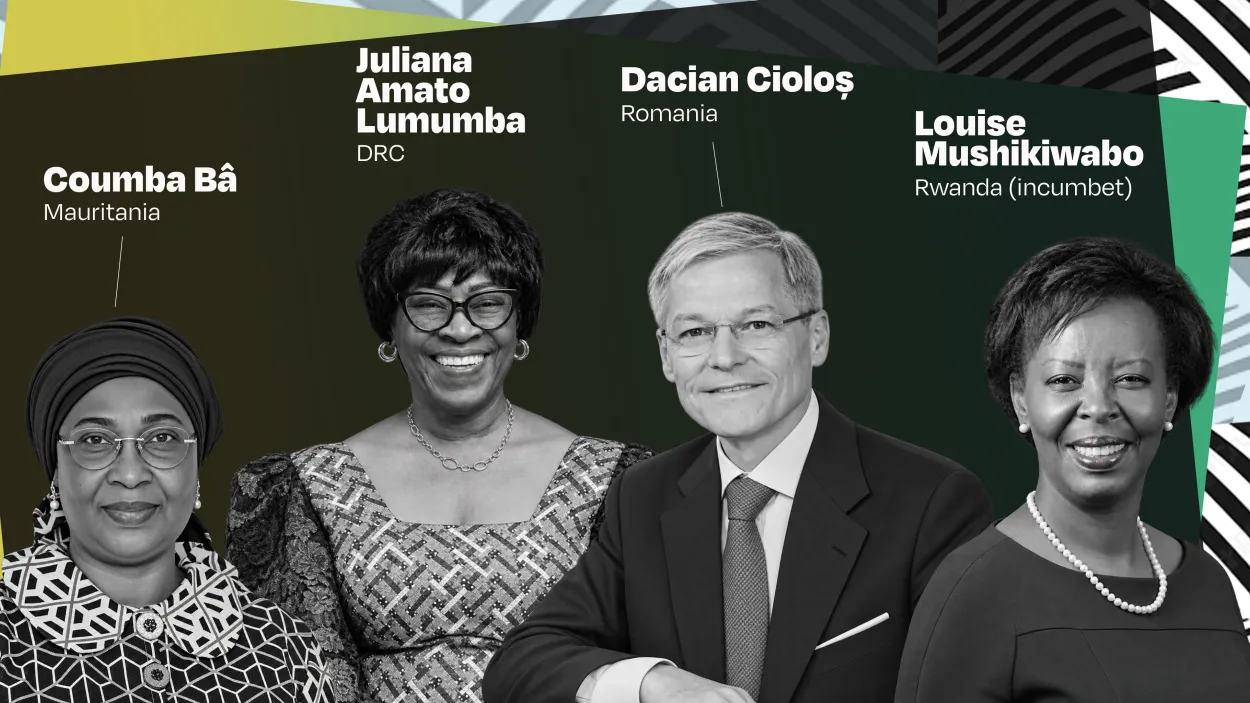
The four candidates for OIF's Secretary-General (left to right): Coumba Bâ, Juliana Amato Lumumba, Dacian Cioloș and Rwanda's Louise Mushikiwabo ©Business Insights Africa (Montage)
KIGALI - Rwanda is backing Louise Mushikiwabo’s bid for a third term as head of the International Organisation of La Francophonie (OIF), even as the Democratic Republic of Congo (DRC) rallies support for Romania’s candidate. The shift moves the contest beyond a direct rivalry between Kigali and Kinshasa and tests whether the bloc can agree on a leader as war continues in eastern Congo.
Former Romanian Prime Minister Dacian Cioloș thanked DRC on Saturday for backing his vision, after Kinshasa signalled it would withdraw its candidate, former culture minister Juliana Amato Lumumba, to help build consensus. Mauritania’s Coumba Bâ, a doctor and former minister, has also sought the post. The decision is due next week on November 16 at the close of the two-day Francophonie summit in Phnom Penh, Cambodia.
Rwandan Foreign Minister Olivier Nduhungirehe told The New Times that Kigali would keep Mushikiwabo in the race, after the newspaper asked about reports that French President Emmanuel Macron had urged President Paul Kagame to withdraw her candidacy. Congolese outlet Actualité.cd reported that Macron favoured a compromise centred on Cioloș. The reported intervention has put France’s role under scrutiny ahead of the decision.
The dispute over eastern DRC gives the leadership contest significance beyond the organisation itself. DRC accuses Rwanda of backing the M23 rebellion, a view shared by the United Nations. Rwanda denies backing the rebels. By shifting its support to Cioloș, Kinshasa has put its weight behind a candidate who could attract delegations seeking a compromise. Kigali’s decision to stand by Mushikiwabo keeps open the possibility of a contested vote.
A test of consensus
The OIF’s 53 full members are eligible to vote. Consensus remains the preferred route, but Nduhungirehe said the rules allow a ballot if delegations fail to agree, with a simple majority of members present and voting required. The immediate question is whether Congo’s move can persuade enough governments to coalesce around Cioloș, or whether Mushikiwabo can rally support for another four-year term.
Why it matters for Africa
The Francophonie provides African governments with a forum to build coalitions with counterparts in Europe, Asia and the Americas. For businesses, its economic missions offer a way to meet potential trading partners. The OIF’s Central Africa office reported that those missions supported 20 business and institutional participants in 2024. That work gives African members a practical stake in how much attention the next leadership gives to commercial ties across the bloc.
The organisation also funds programmes that reach entrepreneurs and young workers. Its Central Africa office reported that the D-CLIC initiative trained 72 young people in digital skills in 2024, and that its fund for women supported four projects across Burundi and Rwanda. For African members, a measure of the next secretary-general’s term will be whether programmes like these reach more entrepreneurs and jobseekers.
To reach out to the editorial desk, email us at editor@bizinsights.africa