
Bayer deepens Africa agriculture push as smallholder farmers take centre stage
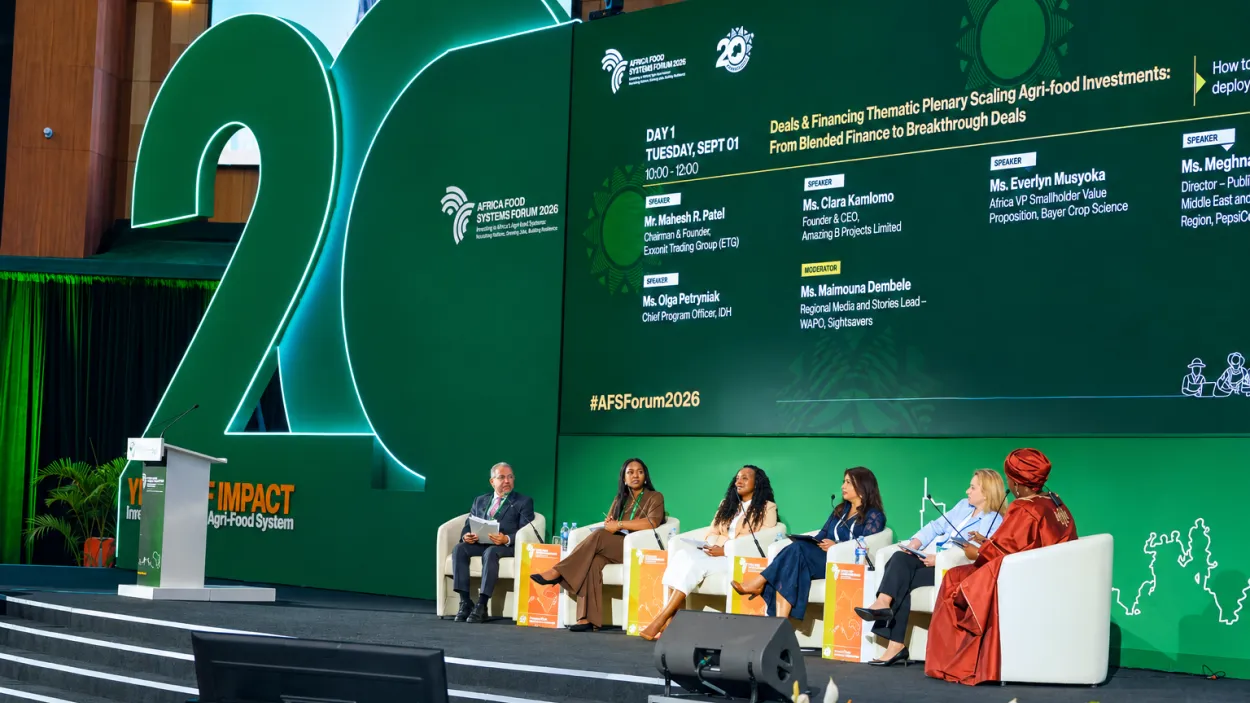
Everlyn Musyoka's participation in the panel discussion, "Deals and Financing: Scaling Agri-Food Investments: From Blended Finance to Breakthrough Deals at the Africa Food Systems in Kigali recently (PHOTO: Inspire/ Fabrice Macumbi)
KIGALI, Rwanda, Sept. 10, 2026 - Bayer is increasing its focus on Africa’s agriculture sector, saying investment in seeds, technology and partnerships will be needed to help the continent feed a fast-growing population and improve incomes for smallholder farmers.
The life sciences company used the Africa Food Systems Forum in Kigali to restate its long-term interest in Africa’s food systems, pointing to investments in vegetable seed development and a $160 million commitment to the Zero Hunger Pledge.
Bayer said it has invested 15 million Euros in vegetable seed varieties designed for smallholder farmers and plans to spend a further $101 million on vegetable seed research and development by 2030. The company added that the spending is intended to raise productivity, support more sustainable farming and ensure innovation is shaped around the conditions farmers face on the ground.
The commitments come as African governments try to overhaul agricultural systems under pressure from population growth, climate change, food insecurity and weak infrastructure.
Africa’s population is expected to reach 2.4 billion by 2050, sharply increasing demand for food, jobs and farm productivity. Yet the continent remains a net food importer, despite holding about 60% of the world’s uncultivated arable land.
Smallholder farmers sit at the centre of that challenge. Around 33 million smallholder farmers produce up to 70% of the food consumed in Sub-Saharan Africa, but many still struggle to access finance, technology, markets, improved inputs and basic infrastructure. For Bayer, tackling those constraints means treating farmers not only as recipients of support, but as central players in agricultural markets and the wider food economy.
“Smallholder farmers are not the beneficiaries of food systems transformation; they are the drivers of it,” Katharina Moeller-Herrmann, Bayer’s Director of Partnerships, Smallholder Ecosystem Enablement, said during a roundtable discussion on investment and partnerships for resilient food systems in Africa.
The discussion brought together agriculture stakeholders to examine how more capital can be channelled into climate-smart farming, reduce food losses, strengthen smallholder ecosystems and build partnerships that can accelerate food systems transformation.
Moeller-Herrmann said farmers needed stronger links with the wider agriculture ecosystem, including banks, input suppliers, technology firms, processors and buyers. “Strong partnerships create strong ecosystems, and strong ecosystems create resilient food systems,” she said.
The emphasis on partnerships reflects the scale of the problem facing African agriculture. An estimated 40% of food is lost before it reaches consumers, largely because of gaps in storage, transport, logistics and cold-chain infrastructure. Those losses reduce food availability, cut into farmers’ earnings and make agriculture less attractive to investors.
Climate change is adding to the pressure. Shifting rainfall patterns, droughts, floods and other climate-related shocks threaten yields and make production less predictable for farmers who often have limited access to insurance, irrigation or financial buffers.
Bayer argues that agricultural innovation must therefore go beyond individual products and technologies. The company says investment should also build stronger systems around farmers so improved seeds, training, finance, markets and infrastructure work together.
The company said farmers using its vegetable seeds have reported a 36% increase in income. It also said its sustainable farming practices have contributed to a 45% reduction in methane emissions, while its PRECEON™ Smart Corn technology has recorded yields of up to 18.8 tonnes per hectare.
At the recently ended Kigali forum, Bayer sought to place those investments within a broader argument: Africa’s agricultural transformation will require capital, but it will also depend on whether innovation reaches farmers and solves practical problems.
“Innovation creates its greatest impact when it reaches farmers and helps solve practical challenges,” Moeller-Herrmann said. “Connecting small businesses to larger value chains unlocks growth, opportunity, and shared value,” she said.
She also highlighted the importance of connecting smallholder farmers and small businesses to larger agricultural value chains. Better market access, she said, can help farmers earn more while making rural economies more resilient.
The Kigali discussions come as African governments and development institutions look for ways to mobilise more investment into agriculture. The African Union’s Comprehensive Africa Agriculture Development Programme strategy and action plan for 2026-2035 aims to mobilise $100 billion to strengthen agri-food systems and increase agricultural output.
A key highlight of the forum was Everlyn Musyoka's participation in the panel discussion, "Deals and Financing: Scaling Agri-Food Investments: From Blended Finance to Breakthrough Deals," where she joined industry leaders to explore how strategic investment and collaboration can accelerate the transformation of Africa's agri-food systems.
Further discussions highlighted the importance of mobilising capital, fostering cross-sector partnerships, and creating enabling environments that support farmers and strengthen food systems across Africa.
Bringing together policymakers, investors, private sector leaders, researchers, farmers and development partners, the Forum continues to provide an important platform for shaping the future of food and agriculture on the continent.
For private-sector companies such as Bayer, the question is no longer only whether to invest in African agriculture, but how to ensure that investment creates lasting value across the food system.
That means helping farmers access quality inputs, finance, technology, knowledge and reliable markets, while also creating the conditions businesses need to invest over the long term.
Bayer’s participation at the forum formed part of a wider programme of discussions on agricultural investment and resilience. Company representatives joined sessions on agri-food financing, future investment opportunities and the shift from emergency responses to longer-term food systems resilience.
The company also used the forum to stress the need to bring stakeholders together early when designing agricultural programmes. Bayer said stronger collaboration and local ownership could improve the chances that interventions last beyond their initial funding cycles.
The message from Kigali was that Africa’s food challenge will not be solved by one company, government or development institution. The scale of the transformation required will depend on whether public and private actors can turn commitments into investment, connect farmers to opportunity and build food systems strong enough to support future generations.
Bayer is a global enterprise with core competencies in the life science fields of health care and nutrition. In line with its mission, “Health for all, Hunger for none,” the company’s products and services are designed to help people and the planet thrive by supporting efforts to master the major challenges presented by a growing and ageing global population